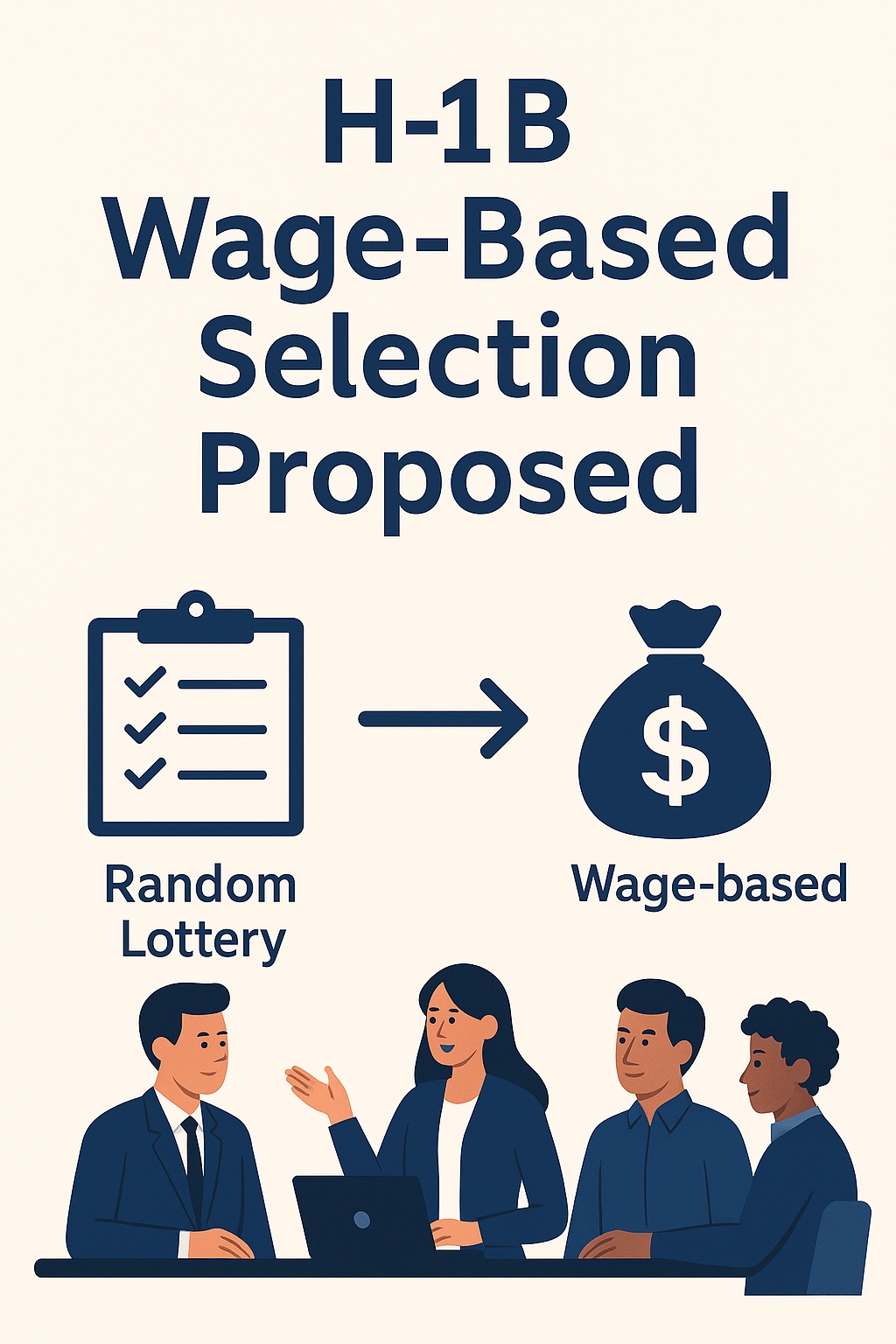
The U.S. Department of Homeland Security (DHS) has introduced a proposed regulation (RIN 1615-AD01) that could significantly change how H‑1B visas are awarded. The current system relies on a random lottery to allocate visas, but the new rule would prioritize applicants based on wage levels—effectively giving preference to higher-paying job offers.
The Current H‑1B Selection Process
Each year, U.S. employers register foreign workers for H‑1B visas, with a cap of 85,000 visas (including 20,000 for those with U.S. advanced degrees). When registrations exceed this cap, a randomized lottery determines which applicants move forward, regardless of the salary or job role.
This equal-opportunity system gives both small startups and large corporations the same chance, whether offering entry-level or high-paying roles.
What the New Proposal Suggests
Under the proposed wage-based system, employers must report the intended wage for each registered foreign worker. The DHS would then prioritize visa selection by wage level, based on the U.S. Department of Labor’s four-tier wage structure:
- Level I – Entry-Level
- Level II – Qualified
- Level III – Experienced
- Level IV – Highly Specialized
Visas would be allocated starting with Level IV offers and continue down the wage levels. If more applicants fall within a wage tier than available slots, a lottery would be conducted within that tier.
| Aspect | Current System | Proposed System |
|---|---|---|
| Selection Method | Purely random lottery | Prioritized by wage level; lottery within tier |
| Wage Consideration | None | Higher wages increase chances of selection |
| Impact on Employers | Equal footing for all | Advantage to companies offering top salaries |
| Impact on Workers | Equal chance regardless of pay/experience | Favors experienced, higher-paid professionals |
Why This Change Is Being Proposed
The original concept emerged during the Trump administration, aligning with a broader effort to implement a merit-based immigration system. DHS believes the wage-based model will:
- Encourage companies to raise salaries for foreign hires
- Protect the U.S. labor market and reduce underpayment
- Ensure H‑1B visas go to top-tier talent in specialized roles
Supporters argue that higher wages often correlate with advanced skills and experience, meaning the visa program would prioritize workers who bring the most value to the U.S. economy. It could also curb misuse of the program, where some employers sponsor H‑1B holders to fill low-wage roles rather than hire locally.
Concerns and Opposition
Despite these intentions, critics—especially from smaller companies, startups, academic institutions, and immigration advocacy groups—raise serious concerns:
- Disadvantage for Small Employers: Startups and small businesses may struggle to match salary levels offered by tech giants and multinational corporations.
- Barrier to Entry-Level Workers: International students graduating from U.S. universities might find fewer job opportunities if entry-level roles are de-prioritized.
- Reduced International Appeal: The uncertainty of job prospects under the new system could make the U.S. less attractive to foreign students and skilled professionals.
There are also fears that sectors with modest wage structures—or those located in lower-cost regions—may find it harder to fill critical roles if they can’t compete on salary.
What’s Next?
The proposal is currently under review. DHS will open a period for public comment, after which it will decide whether to finalize or revise the rule. If adopted, the new selection system could take effect as early as late 2025 or 2026, depending on administrative and political developments.
Final Thoughts
If implemented, the wage-based H‑1B selection system would mark a major shift in U.S. immigration policy. It would prioritize high-paying roles and experienced professionals, altering how companies compete for and retain global talent. Whether this change will benefit the U.S. economy or create new challenges remains at the center of ongoing debate.
Employers, legal experts, and foreign workers alike will be watching closely—because the future of H‑1B visas may be on the cusp of transformation.